
17May 2023
Choosing the Right Material for Your Timber Floors
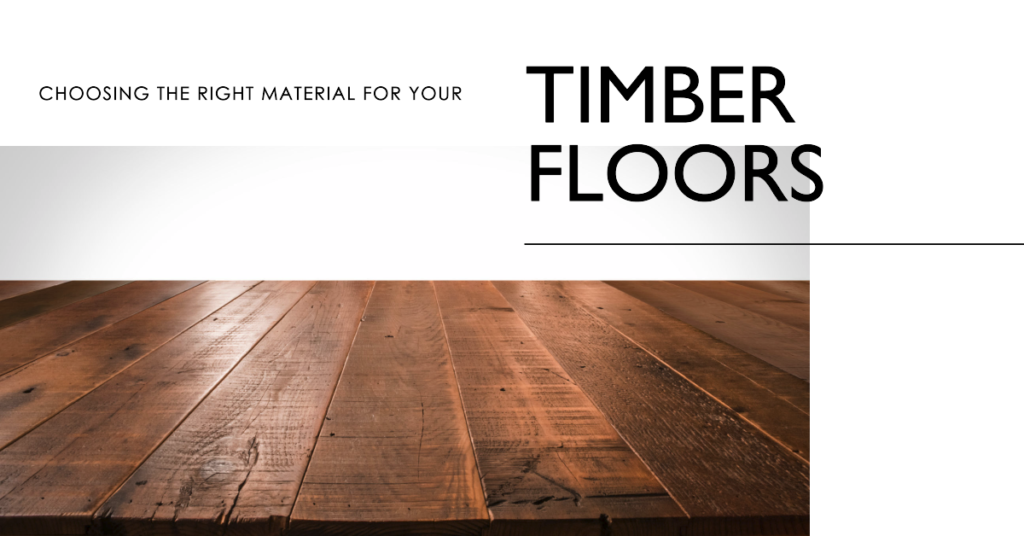
The Importance of Choosing the Right Material for your Timber Flooring
When it comes to choosing the right material for your timber floors, there are a number of factors to consider. Not only do you want something that looks great, but you also need something that is durable and will last for years to come. The material you choose can also impact the value of your property, so it’s important to make an informed decision.
One thing that many people overlook when choosing a timber floor material is the impact on their health. Some materials can emit harmful chemicals into the air, which can be detrimental to your health over time.
This is why it’s important to choose a material that is eco-friendly and non-toxic. Another important consideration when choosing a timber floor material is maintenance.
Some materials require more maintenance than others, and this can impact both how often you need to clean your floors as well as their longevity. It’s important to consider how much time and effort you’re willing to put into maintaining your floors before making a decision.
The Benefits of Timber Flooring
There are many benefits to choosing timber floors over other flooring options. For one thing, they look great and add warmth and character to any room in which they are installed.
Additionally, they are durable and long-lasting if properly maintained. Timber floors are also eco-friendly when compared with other flooring options like carpeting or vinyl flooring.
They are made from renewable resources and don’t have the negative environmental impact that some other materials can have. Timber floors come in a variety of colors and patterns, so you can choose something that complements your home’s existing décor while still adding something unique and beautiful.
Overview of the Best Materials for Timber Floors
When it comes down to choosing specific materials for your timber floor installation project, there are a few that stand out above the rest. Hardwood timber floors are a classic choice that offer both durability and beauty, while engineered timber floors can be more cost-effective and environmentally friendly.
Bamboo is another great option for those who want an eco-friendly material, as it is fast-growing and highly renewable. Reclaimed timber floors offer something truly unique and characterful, while also being cost-effective.
Ultimately, the best material for your timber floors will depend on a variety of factors including your budget, the look you want to achieve, and how much maintenance you’re willing to put in. However, by considering all of these factors before making a decision you can rest assured that you’re making the right choice for your home or business.
Hardwood Timber Flooring

The Unmatched Benefits of Hardwood Timber Flooring
When it comes to timber floors, nothing beats the classic and timeless look of hardwood. It’s the choice for homeowners who want to make their houses look elegant and sophisticated.
Hardwood timber floors add natural warmth, a unique character, and an undeniable charm that cannot be replicated by any other material. Aside from the aesthetic appeal, hardwood timber floors come with numerous advantages.
They are durable and long-lasting compared to other materials. With proper care and maintenance, they can last for decades without showing significant signs of wear and tear.
Hardwood is also easy to clean, and it doesn’t trap dirt or dust particles like carpets do. If you’re looking for flooring material that adds value to your home, then you should consider investing in hardwood timber floors.
They are a significant selling point when it comes to property resale value. Homes with hardwood timber floors fetch higher prices than those without them because they are perceived to be more high-value.
Types of Hardwoods and Their Characteristics
When it comes to choosing the right type of hardwood for your floor, there are various options available in the market today. Some popular choices include oak, maple, cherry, walnut, hickory among others. Each type has its own unique characteristics that make it suitable for different environments.
Oak is one of the most popular types of hardwood used in flooring because it’s durable and readily available in many different finishes; its colors range from light golden hues to dark browns with beautiful grain patterns that give an elegant feel.
Maple is another popular option due to its hardness rating
making it resistant against scratches or dents; this makes it ideal for high-traffic areas such as hallways or living rooms where constant traffic occurs.
Walnut has a rich hue ranging from light brown tones which darken with age to give a deep chocolate brown color. This floor type is ideal for rooms with minimal natural light as it can help to warm up space by reflecting light well.
Maintenance and Durability
Hardwood timber floors require proper maintenance to keep them looking good over time. Sweeping or vacuuming regularly, cleaning spills immediately, and using protective pads under furniture legs can help maintain the floors’ appearance.
It’s also essential to refinish the hardwood every few years to remove visible scratches and marks that make the floor look old and dull; this will restore its original shine and luster. With the proper care, hardwood timber floors can last for many decades without showing significant signs of wear and tear.
When it comes to timber floors, nothing beats the unmatched elegance, durability, longevity, and beauty of hardwood flooring materials.
They offer a timeless appeal that never goes out of style.
The different types available make it easy for homeowners to choose one that suits their specific needs in terms of aesthetic appeal as well as durability. And while they do require some upkeep over time, the benefits they provide far outweigh any minor inconvenience – making them an investment worth considering for any homeowner looking for high-end flooring options.
Engineered Timber Flooring
The Advantages of Engineered Timber Flooring
If you’re looking for a timber floor that combines the natural beauty of wood with the durability and strength of modern materials, then engineered timber floors are an excellent choice. One of the biggest advantages of these floors is their versatility, making them suitable for use in both residential and commercial settings. They are highly resistant to wear and tear, moisture, and heat, making them ideal for high-traffic areas.
Another great advantage of engineered timber floors is their ability to maintain their appearance over time. Unlike solid hardwood floors, which can warp or cup when exposed to moisture or extreme temperatures, engineered timber floors are constructed with multiple layers that provide stability against environmental changes.
How Engineered Timber Floors Are Made and Their Composition
Engineered timber floors are made from a combination of real wood veneer bonded onto a plywood base. The top layer is usually between 2mm-6mm in thickness and is made from high-quality hardwoods such as oak or maple. The plywood base is typically made up of multiple layers that are glued together in opposite directions to create a strong and stable core.
The combination of different materials gives engineered timber floors excellent dimensional stability since each layer reacts differently to changes in temperature or humidity. By using various types of wood for the top layer, manufacturers can create a wide range of colors and patterns that mimic natural hardwoods.
Cost-effectiveness and Sustainability
One area where engineered timber floors really shine is cost-effectiveness. Compared to solid hardwood flooring options, they are more affordable since they require less raw material without sacrificing quality or durability.
In addition to being cost-effective, they also have a lower environmental impact than solid hardwoods thanks to their construction process which involves less waste material leftover after production. Plywood boards used as the base material are produced from fast-growing trees like birch or poplar, which can be sustainably sourced.
If you’re looking for a durable and cost-effective alternative to solid hardwood floors with a more eco-friendly profile than other options, then engineered timber floors are an excellent choice. Thanks to their versatility and ease of maintenance, they offer the perfect combination of natural beauty and modern technology.
Bamboo Timber Flooring
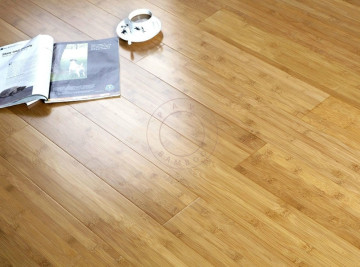
Advantages of Bamboo Timber Flooring: An Eco-Friendly Option
Bamboo is considered an environmentally friendly option for timber floors. It is a highly renewable resource that grows much faster than traditional hardwoods, making it a more sustainable option. Bamboo timber floors come in a range of colors and grains, providing versatility when it comes to interior design.
Another advantage of bamboo timber floors is that they are resistant to moisture and pests, making them ideal for humid climates and areas prone to insect infestations. Unlike hardwoods, bamboo does not require any chemical treatments or pesticides to protect against pests.
Sustainability and Eco-friendliness: A Clear Winner
When it comes to sustainability, bamboo timber floors are the clear winner. Traditional hardwoods take decades or even centuries to grow, while bamboo can be harvested in just three to five years.
Additionally, bamboo requires less water and fertilizers than traditional hardwoods. In terms of eco-friendliness, bamboo also has an advantage over traditional hardwoods.
The harvesting process for bamboo does not require clear-cutting forests like the process for traditional hardwoods does. In fact, many bamboo forests are specifically grown for commercial use.
Durability, Maintenance, and Installation: A Little More Work
While bamboo timber floors have many advantages over traditional hardwoods in terms of sustainability and eco-friendliness, they do require some additional maintenance compared to other options. For example, they may need to be refinished more often due to their softer nature compared with harder woods like oak or maple. In terms of installation difficulty,
installing a bamboo floor can be more challenging due to the hardness of the material.
This means that special tools may be required during installation which could result in higher installation costs overall. However, despite these challenges that come with owning a bamboo timber floor, the benefits of sustainability and eco-friendliness make it well worth any extra effort.
Reclaimed Timber Flooring
Sustainability: A Case for Reclaimed Timber Flooring
If you want to make an eco-friendly choice, reclaimed timber floors are the way to go. These floors are made from recycled wood that has been salvaged from old buildings or structures that have been demolished.
By using reclaimed timber, you are preventing perfectly good wood from ending up in landfills where it would rot and produce methane gas. In addition, reclaimed timber floors require less energy to produce than new timber floors since the wood has already been harvested and processed once before.
Uniqueness and Character: A One-of-a-Kind Flooring Option
Reclaimed timber floors give your home or business a unique look that cannot be replicated with new materials. The wood used in these floors may come from old factories, barns, or even ships, giving each plank its own history and character. The natural imperfections in the wood, such as nail holes and knots, add to the charm of these rustic-looking floors.
Cost-Effectiveness: Good Quality at a Lower Price Point
Reclaimed timber floors can be surprisingly affordable compared to brand new hardwood flooring options. Since the wood is recycled, there is little cost involved in harvesting or processing it – which means lower prices for those who choose this option instead of buying new hardwoods. Additionally, many companies that specialize in reclaimed flooring have lower overhead costs because they don’t have to purchase large amounts of raw materials or build expensive manufacturing facilities.
Installation: Some Challenges But Worth It In The End
One challenge with reclaimed flooring is finding enough matching planks for larger spaces since each piece will be different from another by nature of being salvaged from different sources over time. However it’s worth noting that installing reclaimed timbers takes longer than other types of installation due to the need for more detailed measurements and planning.
Once installed, reclaimed timber floors require a bit of extra care such as filling in gaps and sanding down rough spots to ensure a smooth surface. However, the extra effort is worth it in the end for a one-of-a-kind look that can’t be replicated with new materials.
Reclaimed timber floors are a great option for those looking for an eco-friendly, unique, and cost-effective flooring option. While installation might take a little longer and require more effort than other types of flooring options, the result is worth it in terms of sustainability benefits and aesthetic appeal.
Comparing the Best Materials for Timber Flooring
Cost comparison between different materials.
When considering the cost of timber flooring materials, it is important to think beyond just the initial purchase price. While some materials may be cheaper upfront, they may not offer the same level of durability and longevity as higher quality options.
Hardwood timber floors tend to be on the more expensive side, but their durability and timeless beauty make them a worthwhile investment in your home or business. Engineered timber floors are a cost-effective alternative that can mimic the look of hardwood at a lower price point, but you sacrifice some of the natural beauty and long-term value.
Bamboo timber floors may seem like an affordable and eco-friendly option, but they often require more maintenance and can have a shorter lifespan than other types of timber flooring. Reclaimed timber floors can also vary in price depending on their source and condition, but their unique character and sustainability make them worth considering for those willing to pay a premium.
Durability comparison between different materials.
When it comes to durability, hardwood timber floors are hard to beat. They are naturally resistant to wear and tear, making them perfect for high traffic areas or homes with pets or children. Engineered timber floors also offer good durability due to their layered construction.
Bamboo timber floors are less durable than hardwoods due to their softer composition, so they may not be ideal for heavy use areas. Reclaimed timber floors can vary greatly in terms of durability depending on their age and condition, so it is important to thoroughly inspect any reclaimed material before installation.
Installation comparison between different materials.
The installation process for different types of timber flooring can vary greatly depending on factors such as subfloor type and existing floor coverings. Hardwood timber floors typically require professional installation due to their solid wood construction and need for acclimation. Engineered timber floors are often easier to install due to their click and lock systems, but may still require professional installation for optimal results.
Bamboo timber floors can be installed using a variety of methods, but it is important to follow manufacturer guidelines and ensure proper subfloor preparation. Reclaimed timber floors can also present unique installation challenges due to their irregular shape and size.
Final Thoughts
When it comes down to choosing the best material for your timber floors, there is no one-size-fits-all answer. The decision should be based on your individual needs and preferences, as well as factors such as budget and maintenance requirements. While hardwood timber floors may offer the most in terms of durability and timeless beauty, engineered timber floors provide a more cost-effective alternative without sacrificing too much quality.
Bamboo timber floors can be a great eco-friendly option for those willing to put in a little extra maintenance effort, while reclaimed timber floors offer a unique character and sustainability that cannot be replicated with new materials. Ultimately, the choice comes down to what you value most in your flooring – whether that be aesthetics, durability or environmental impact – so do your research and choose wisely!
Conclusion
After analyzing various materials for timber floors, it is clear that the best material depends on your specific needs. If you want a classic and timeless look, hardwood timber floors are the way to go.
They are durable, easy to maintain, and come in a wide range of colors and finishes. However, if sustainability is important to you, consider bamboo or reclaimed timber floors.
Both materials are eco-friendly and offer unique aesthetic qualities. For those on a budget but still seeking quality materials, engineered timber floors may be the answer.
They are cost-effective without sacrificing durability or style. Ultimately, the decision comes down to personal preference and priorities.
Summary on the Best Material for Your Needs
Hardwood timber floors are ideal for those looking for a traditional look with durability and low maintenance requirements. Engineered timber floors provide similar benefits while being less expensive than solid wood options.
Bamboo offers eco-friendliness while still providing the durability necessary for daily use. Reclaimed timber is an excellent choice for those who prioritize sustainability or wish to incorporate some character into their space through its unique appearance.
Final Thoughts on Choosing the Right Material for Your Home or Business Timber Flooring
When deciding which material is best suited for your home or business environment, it’s essential to consider factors such as aesthetics, budget constraints, environmental impact concerns and purpose of use. Ultimately your choice will depend upon what you value most in terms of appearance, durability ecological impact costs amongst other things.
It’s worth noting that whichever material you choose; you can rest assured knowing that a well-crafted wooden floor will bring natural warmth into any setting – both aesthetically pleasing and environmentally friendly solution that offers homeowners long-lasting functionality. Choose wisely when contemplating over which material would make up your dream floorboard as it’s going to be an investment that stays with you for years — perhaps even decades to come.